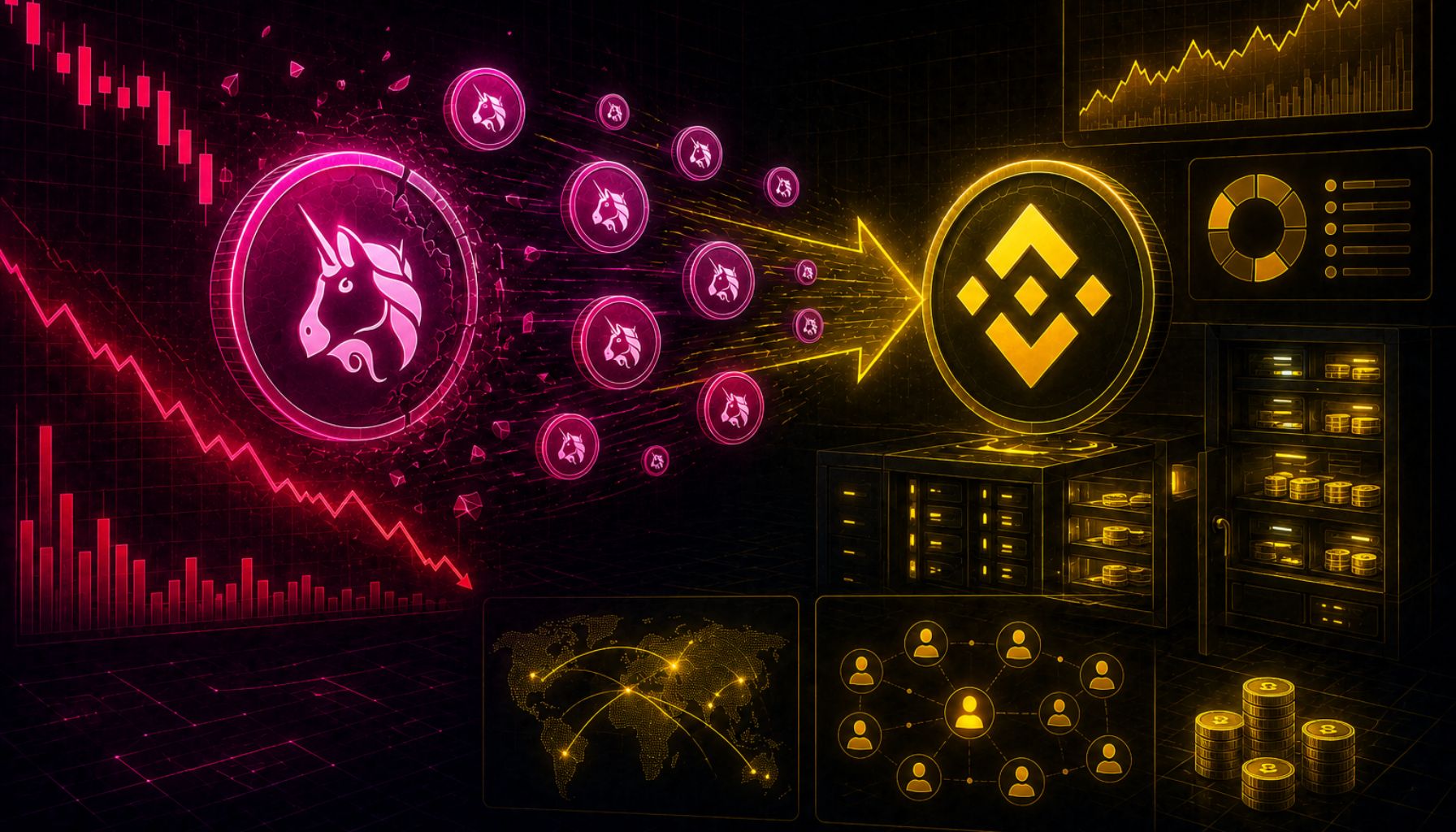
Uniswap Adds Developer Analytics as Swap API Usage Crosses $2B

TL;DR: Users of the developer dashboard can examine requests by endpoint, error counts, settled swaps, network-level activity and average trade size. A dashboard does not guarantee trades will settle or remove smart-contract and network risks.
Uniswap Labs launched Developer Analytics on October 28, adding request, success-rate and swap-volume reporting to its developer dashboard. The company said more than 10,000 builders had signed up for the Uniswap Developer Platform and had routed $2 billion in volume through its API.
The announcement and the numbers
The most concrete starting point is the dated disclosure from Uniswap Labs. It offers a specific basis for assessing Uniswap Developer Analytics without turning the story into unsupported price speculation.
Users of the developer dashboard can examine requests by endpoint, error counts, settled swaps, network-level activity and average trade size. Tables can be exported to CSV, allowing teams to combine protocol activity with their own application logs and business metrics.
Announcements in crypto often arrive before the data needed to price their longer-term significance. A sensible reading separates what has already been delivered from what still needs commercial adoption, technical validation or regulatory clearance.
Why the development matters
The question for market participants is what Uniswap Developer Analytics establishes today and what remains uncertain. An immediate reaction is not the same as evidence of a durable economic outcome.
The release signals that decentralised trading infrastructure increasingly competes on developer experience, not simply token liquidity. Enterprise integrators need performance evidence and a way to detect when a change damages conversion or execution.
For investors, a protocol upgrade should be distinguished from automatic economic value for a token. Fees, governance, user retention and the distribution of benefits can differ substantially from the headline adoption story.
A durable signal would be consistent follow-through: actual usage, transparent reporting and a credible explanation of risk. Short-term token-price moves can be driven by macroeconomic conditions or leverage and may say little about whether the product or initiative succeeds over months and years.
Risks the headline does not resolve
None of this removes the need for independent assessment. The published evidence identifies a development, while its risk and long-term economics are still open to examination.
A trading interface depends on external quoting and settlement services that can return errors or degrade under load. Observability ties a request to an outcome, giving engineering teams ways to separate user behavior, API reliability and on-chain execution conditions.
A dashboard does not guarantee trades will settle or remove smart-contract and network risks. API request counts and transaction volume also require context: high activity can reflect very different user engagement, transaction sizes or market conditions.
DeFi applications make financial rules executable through code, but code still depends on market inputs, transaction ordering and the availability of liquidity. A smart contract can follow its programmed conditions precisely even when those conditions produce an outcome a user did not expect.
The milestones to watch
The immediate checklist is relatively straightforward: look for verifiable implementation details and avoid interpreting a stated target as an outcome that has already occurred.
Builders will judge the tool by whether it helps diagnose failed swaps, reconcile transaction history and improve user retention. Actual integrations and service reliability are a more grounded measure than using the signup count alone as a proxy for adoption.
From a market perspective, the first task is to separate the scale of the announcement from the scale of economic activity that has actually occurred. A company may report a large addressable market, an institutional name or a future capability, but those are not equivalent to settled transactions or recurring fee income. This is why the primary disclosure is a better starting point than a trading narrative attached to it.
Investors also need to separate changes in infrastructure from changes in token demand. Revenue may accrue to a company, a protocol treasury or a service provider without necessarily creating a one-for-one benefit for holders of a related token. Market impact depends on adoption, competition and the design of whatever fees or incentives are involved.
Primary source: Uniswap Labs’s primary announcement. This reporting reflects information available on October 31, 2026; targets, estimates and statements about future plans are attributed to their issuers.
This article was written by the News Desk and edited by Samuel Rae.
Related stories
Tether-Backed FASE Foundation Targets Scams and Stablecoin Aid

Hanwha Chooses Chainlink Data and CCIP for Global Tokenization Platform
Chainlink Unveils 24/7 Pricing for Tokenized Assets as Aave Adopts Feeds